
ADHD is a lifelong neurodevelopmental disorder1, with symptoms of inattention, hyperactivity-impulsivity and emotional dysregulation.2
Once thought to be a childhood disorder, ADHD is now known as a condition that affects a person throughout their life. ADHD affects around 2.5% of adults worldwide, and between 5.9% of children and adolescents.3

People with ADHD are more likely to have comorbid conditions such as depression, bipolar disorder and anxiety disorders4, which can be exacerbated if undiagnosed.

ADHD also increases the likelihood of obesity, smoking, and alcohol and drug misuse, and is associated with autoimmune diseases and other poor long-term health outcomes.5,6

Effective treatment for people with ADHD involves early intervention and diagnosis paired with individualised treatment and care.
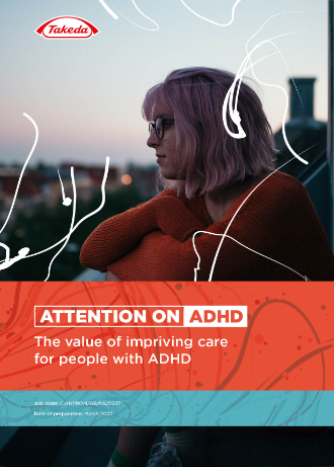
Read our ‘Attention on ADHD’ report, which uses a new budget impact analysis model commissioned by Takeda to show the value of increasing treatment rates to realise healthcare and social savings.
1. Deberdt, W., Thome, J., Lebrec, J. et al. (2015). Prevalence of ADHD in nonpsychotic adult psychiatric care (ADPSYC): A multinational crosssectional study in Europe. BMC Psychiatry 15, 242
2. American Psychiatric Association, DSM-5 Task Force. (2013). Diagnostic and statistical manual of mental disorders: DSM-5™ (5th ed.). American Psychiatric Publishing, Inc.
3. Faraone, S. et al (2021). The World Federation of ADHD International Consensus Statement: 208 Evidence-based conclusions about the disorder. Neurosci Biobehav Rev. 128:789-818
4. Sobanski E. (2006). Psychiatric comorbidity in adults with attention-deficit/hyperactivity disorder (ADHD). Accessed via: https://link.springer.com/article/10.1007/s00406-006-1004-4. [Accessed January 2023].
5. Faraone, S. et al (2021). The World Federation of ADHD International Consensus Statement: 208 Evidence-based conclusions about the disorder. Neurosci Biobehav Rev. 128:789-818
6. Chen, M. et al (2017). Comorbidity of Allergic and Autoimmune Diseases Among Patients With ADHD. J Atten Disord. 21(3):219-227.